
 Kim
KimI recently traveled to Greece with an old friend. One of the stops we made – the only stop I asked to add to the itinerary – was the island of Paros.
While Athens was storied, Santorini was beautiful, and Mykonos was great fun, we both agreed Paros was our favorite stop. Fewer tourists, slower vibes, good food. Other than the sardonic, wry humor inherent in the people of Greece, this was my dearest memory of the country.
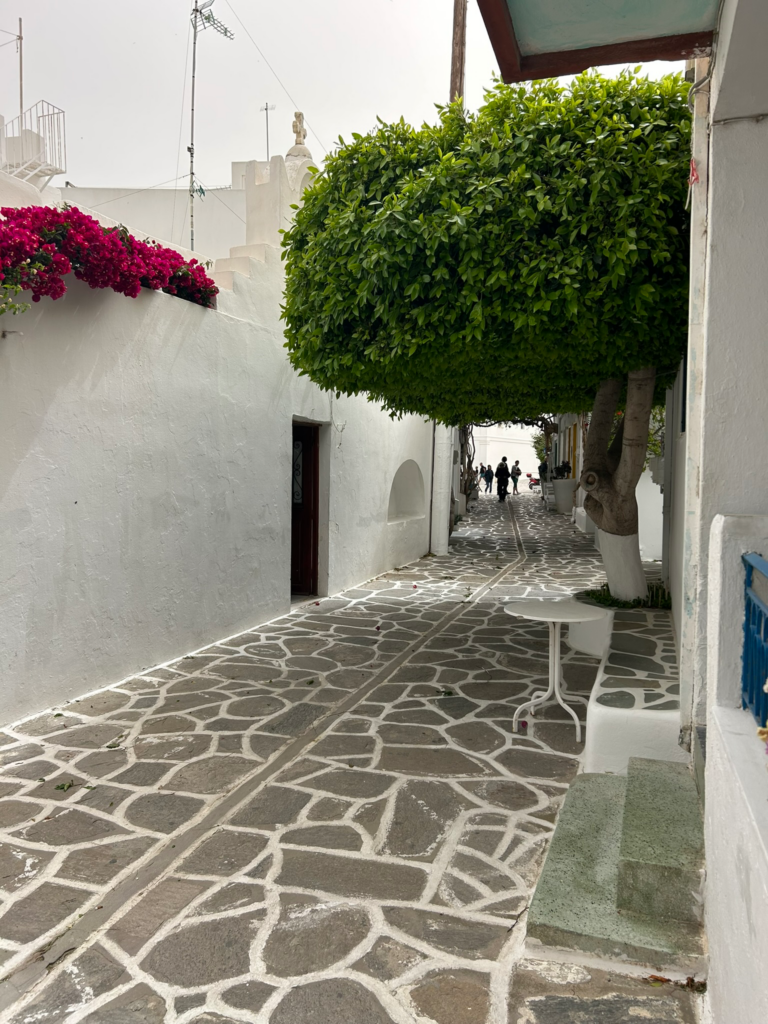
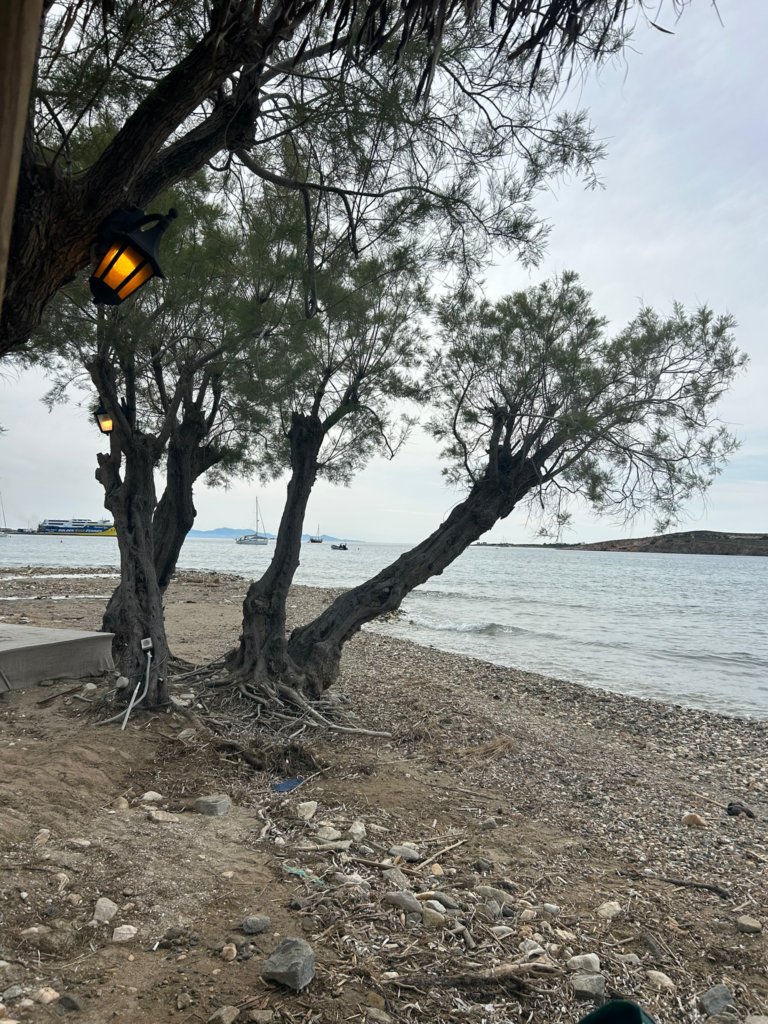
One of my favorite moments of the trip was having a drink in a porch swing on the beach, overlooking the Aegean Sea as the sun set. Sheltered by the trees, music playing in the distance. The wind cooling our skin, hot from a day of adventuring. That was the feeling of Paros.
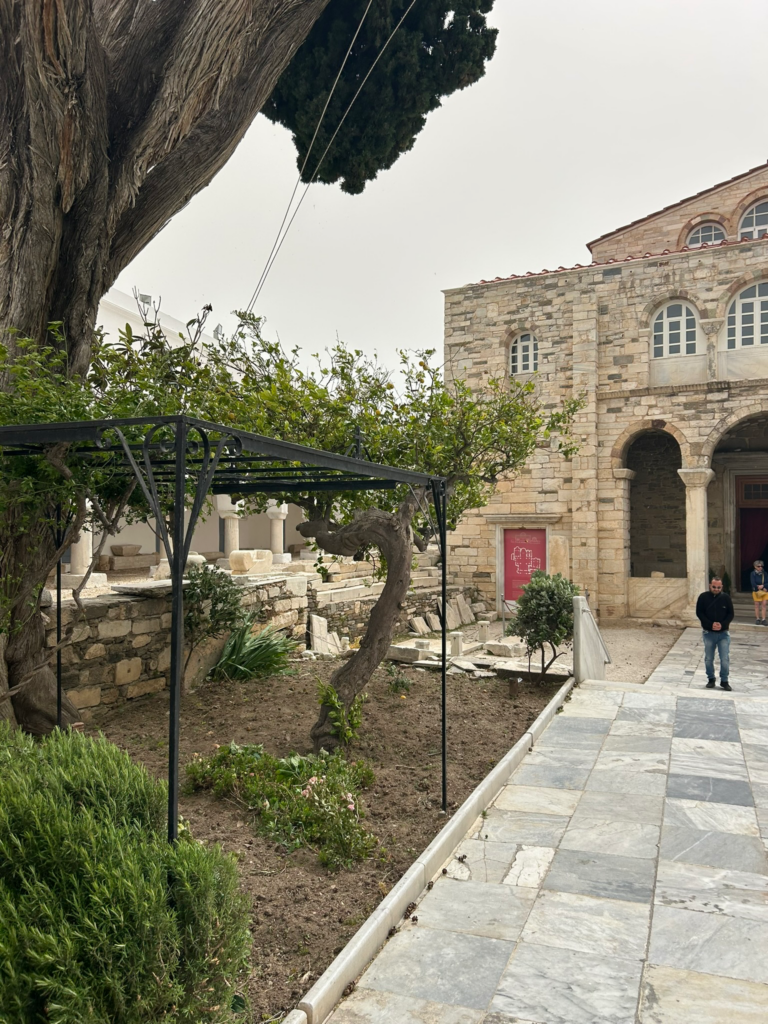
But we were on this island for a specific reason. I wanted to see Panagia Ekatontapiliani, or Our Lady of 100 Doors. The 4th-century Byzantine church – famous for its legend of 99 visible doors – and one hidden one – plays a key role in the series I’m writing. And I wanted to see it in person. To run my fingers along the wood of the pews and breathe in the rosemary and lemon scented air of the courtyard. To just feel it.
The church was beautiful. Smaller than I thought it would be. And importantly, significantly fewer doors. Turns out the name is more of a mistranslation. And a myth. Which is okay. Because fiction is flexible. And I’m already working in myth.
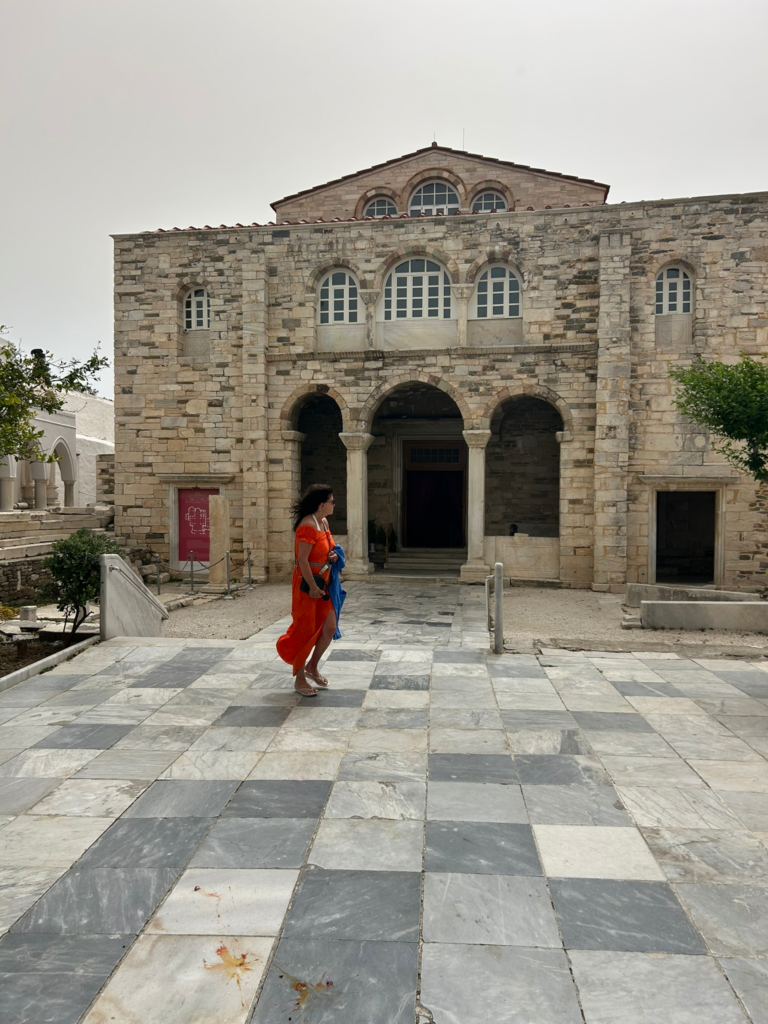
It was windy on the day we toured the church, as you can see by the woman’s hair and dress blowing. As if the church were trying to discourage us from learning its secrets.
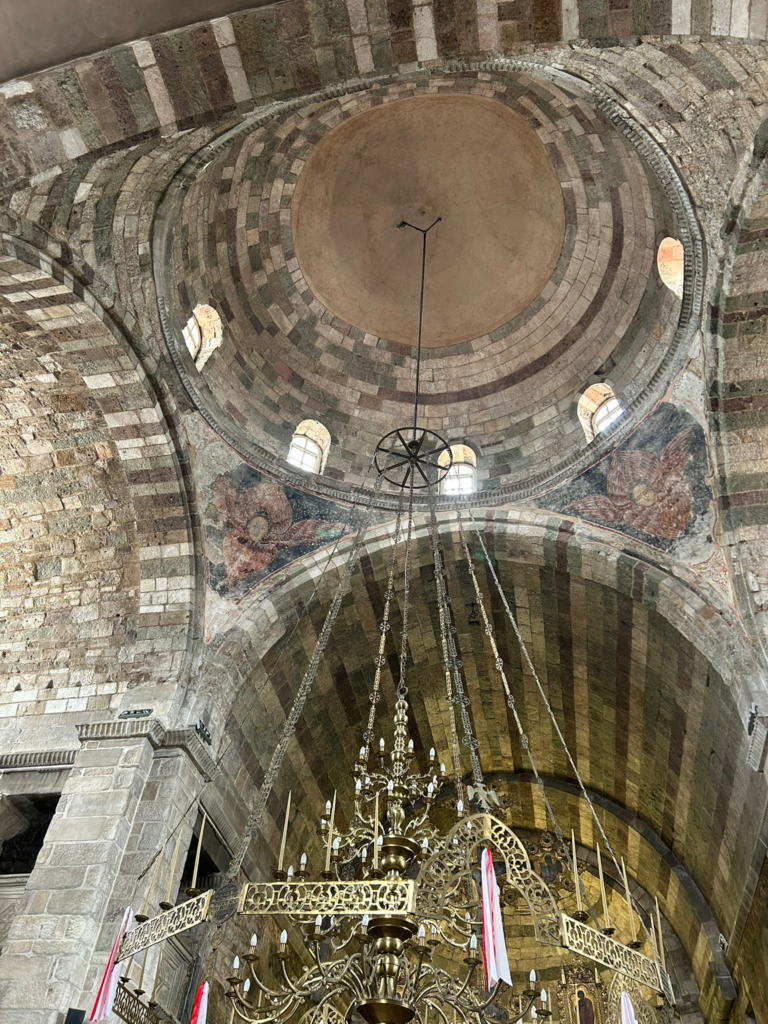
Inside, near the altar, a large piece of glass cuts into the stone floor, revealing what is left of the temple beneath. A shrine to Aphrodite originally sat on this site, and was covered up with the Christian church in the 4th Century. This is a theme in my WIP: the systematic dismantling of older worship sites by modern religions.
Every August, faithfuls of the village parade icons of Mary to the Aegean Sea, which is about a five minute walk from the front doors of the church. Fireworks and feasting and celebration follow on the beach. But this ritual did not originate in Christian theology.
Aphrodite was born of the sea. Worshipers of the Greek goddess of love, beauty, desire, and procreation would walk effigies of her from the temple to the sea and wash them in the water.
I thought a lot about Aphrodite as I sat and watched pilgrims line up to kiss the silver plated Mary icon near the pulpit in one of the oldest Christian churches in Greece. Mere steps from the silver icon, the rubble of the original worship site crumbled beneath the glass, overlooked by visitors as they walked over the glass on their way to Mary.
Can you imagine how Aphrodite felt, after being worshiped for 1,000 years, watching humans suddenly change her day of celebration to someone else’s? Keeping the ritual but changing the diety? Building the church over her temple? Trying to erase her from history, condemn her to myth?
No wonder the people of Greece drip with sarcasm.